Reward Pathways: Mapping Bonus Movements Between Sportsbooks and Casinos
Jonas Butler · Aug 14, 2026
Reward Pathways: Mapping Bonus Movements Between Sportsbooks and Casinos
Operators in the gambling sector have developed systems that allow promotional credits and loyalty points to transfer across different product verticals, creating what industry analysts describe as reward migration. These mechanisms enable users to move value earned on sportsbooks into casino environments or vice versa, often through integrated account features that link multiple offerings under one operator umbrella. Data from platform audits shows that such transfers occur most frequently during seasonal promotions when operators seek to balance player activity between live event betting and table or slot games.
Mechanics Behind Cross-Platform Transfers
Many platforms structure their loyalty programs with shared wallets or conversion rates that convert sportsbook winnings into casino credits at set ratios, typically ranging from one-to-one for standard points up to variable multipliers during targeted campaigns. Observers note that these systems rely on backend software capable of tracking player behavior across verticals, which then triggers automated migrations when certain thresholds are met. For instance, a user who places accumulator bets on a sportsbook might accumulate points that convert directly into free spins once the account reaches a designated level, and this process happens without requiring separate deposits or logins.
Studies conducted by research teams at the University of Nevada, Reno have documented how these conversion tools reduce player churn by maintaining engagement across both betting formats. The same research indicates that operators who implement seamless migration features report higher retention rates compared to those maintaining separate reward silos, because users face fewer barriers when shifting focus from one product to another.
Regional Patterns Observed in 2026
Throughout August 2026, several North American and European markets recorded increased volumes of reward transfers following the launch of new integrated platforms. Figures released by the American Gaming Association reveal that operators in regulated U.S. states saw a measurable uptick in cross-vertical redemptions during that period, particularly after major sporting events concluded and players redirected attention toward casino offerings. Similar patterns emerged in Australian jurisdictions where state-level oversight bodies track loyalty program usage, showing that migration rates climbed when operators introduced time-limited conversion windows tied to specific calendar events.
What's interesting is how regulatory environments influence these flows. In markets with stricter advertising rules, operators lean more heavily on internal migration tools to sustain activity rather than external marketing, which keeps rewards circulating within their ecosystems. Data indicates that such approaches allow companies to comply with spending caps while still delivering perceived value to account holders.
Player Behavior and Platform Responses
Those who monitor account activity across multiple sites often discover that reward migration works most efficiently when users maintain consistent login patterns and meet minimum activity requirements on both sides of the platform. One documented case involved a group of players who systematically converted sportsbook bonuses into casino cashback offers, then reversed the process during subsequent promotional periods, creating a cycle that extended the usable life of each reward. Platform operators have since introduced cooldown periods and conversion limits to moderate such loops, according to internal policy documents shared with industry partners.
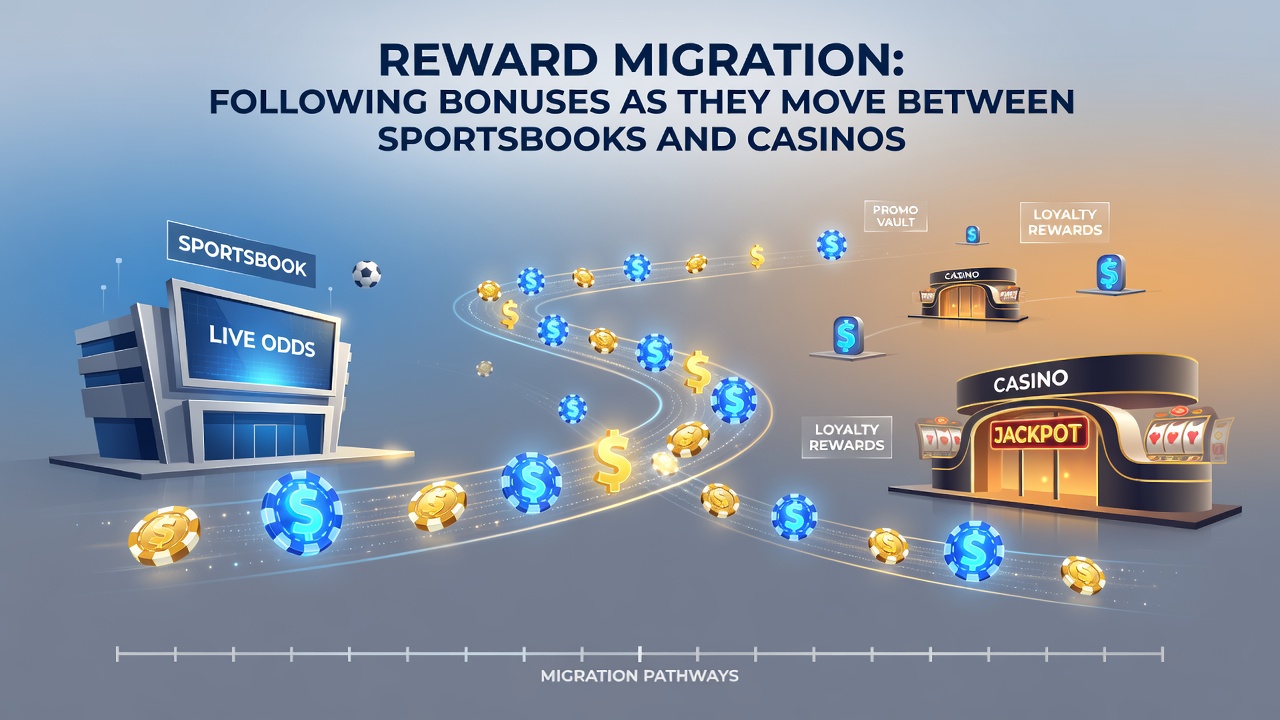
Platforms also adjust migration rules in response to seasonal demand. During periods when live sports betting volume dips, conversion bonuses frequently favor movement into casino products to maintain overall revenue stability. Researchers tracking these adjustments have noted that the timing of such shifts aligns closely with fixture calendars and major tournament schedules, allowing operators to smooth revenue curves without introducing entirely new promotions.
Technical Infrastructure Supporting Migration
Behind these transfers sits a layer of API connections and compliance engines that verify player eligibility before any points move between verticals. These systems check for responsible gambling flags, account verification status, and regional licensing requirements in real time. When conditions align, the migration executes automatically; when they do not, the system either blocks the transfer or routes the user toward an alternative redemption path that stays within permitted boundaries.
Industry reports compiled by the Canadian Gaming Association highlight how operators in provinces with mature online frameworks have invested in unified player databases precisely to facilitate smoother migrations. These databases reduce friction while still enforcing jurisdictional rules that prevent rewards from crossing into unlicensed territory. The result is a controlled environment where players experience continuity even as the underlying reward type changes.
Conclusion
Reward migration continues to evolve as operators refine the technical and regulatory frameworks that govern cross-vertical transfers. Current data shows sustained usage across multiple regulated markets, with conversion volumes responding to both promotional calendars and external sporting events. As platforms further integrate their offerings, the pathways available for moving bonuses between sportsbooks and casinos are likely to become more refined, though always subject to the oversight structures active in each jurisdiction.